
Why Podcasting May Be the Most Underrated AI Visibility Strategy for Lawyers
The most discoverable lawyers are not necessarily the most experienced. They are the ones willing to talk, and if the idea of sitting in front of a microphone makes you uncomfortable, you are not alone. But that hesitation may be costing you more than you think.
YouTube is increasingly one of the primary sources AI systems draw from when building their understanding of who knows what. Unlike a static webpage, a recorded conversation gives an AI system something far richer to work with: the depth of spoken explanation and the implicit credibility of being interviewed by someone else. When a lawyer spends 20 to 45 minutes discussing contentious probate or shareholder disputes on camera, that conversation becomes a parseable asset. In other words, the transcript gets indexed and the topics get mapped. And when a prospective client later asks an AI system who they should speak to, that evidence of expertise is exactly what gets surfaced.
AI Search Looks for Evidence of Expertise
Large language models are trained to identify patterns of authority across the web. They look for signals that indicate someone is genuinely knowledgeable about a topic, rather than simply claiming expertise on a website. Published articles, media citations, conference appearances, and consistent discussion of specialist subjects all contribute to that picture.
A lawyer appearing on a podcast is not merely stating that they are an expert. They are demonstrating expertise through conversation and commentary, and that distinction matters. AI systems are increasingly rewarding evidence of expertise over self-declared expertise.
Every Appearance Creates Multiple Assets
Many lawyers think of podcast appearances as a branding exercise. In reality, a single episode typically generates a range of digital assets: show notes, episode pages, YouTube videos, audio transcripts, social posts, newsletter mentions, and third-party links back to the lawyer's profile.
Each of these creates another opportunity for AI systems to associate a lawyer with specific topics. If a family lawyer appears across multiple podcasts discussing financial settlements and cohabitation disputes, a clear topical footprint begins to form. AI systems recognise recurring themes and build stronger subject-matter associations, which produces greater visibility when users ask relevant legal questions.
The Context Advantage
One of the persistent challenges for law firms is communicating nuance. A website biography might run to a few hundred words. A podcast interview might contain 20 to 45 minutes of detailed discussion in which a lawyer explains how they approach client problems and what common misconceptions they encounter in their practice area. AI models thrive on that kind of context. The more detailed and consistent the information available about a lawyer's expertise, the easier it becomes for AI systems to place that lawyer within a particular legal niche.
Trust and the Third-Party Effect
A podcast appearance carries a different weight from promotional marketing copy. Someone else has extended an invitation, asked substantive questions, and given the lawyer space to demonstrate knowledge on a platform that exists independently of their firm. As AI-generated recommendations become more common, that kind of external validation is becoming a meaningful differentiator. It also humanises the lawyer in a way that written content rarely achieves, and for a profession built almost entirely on trust, that matters.
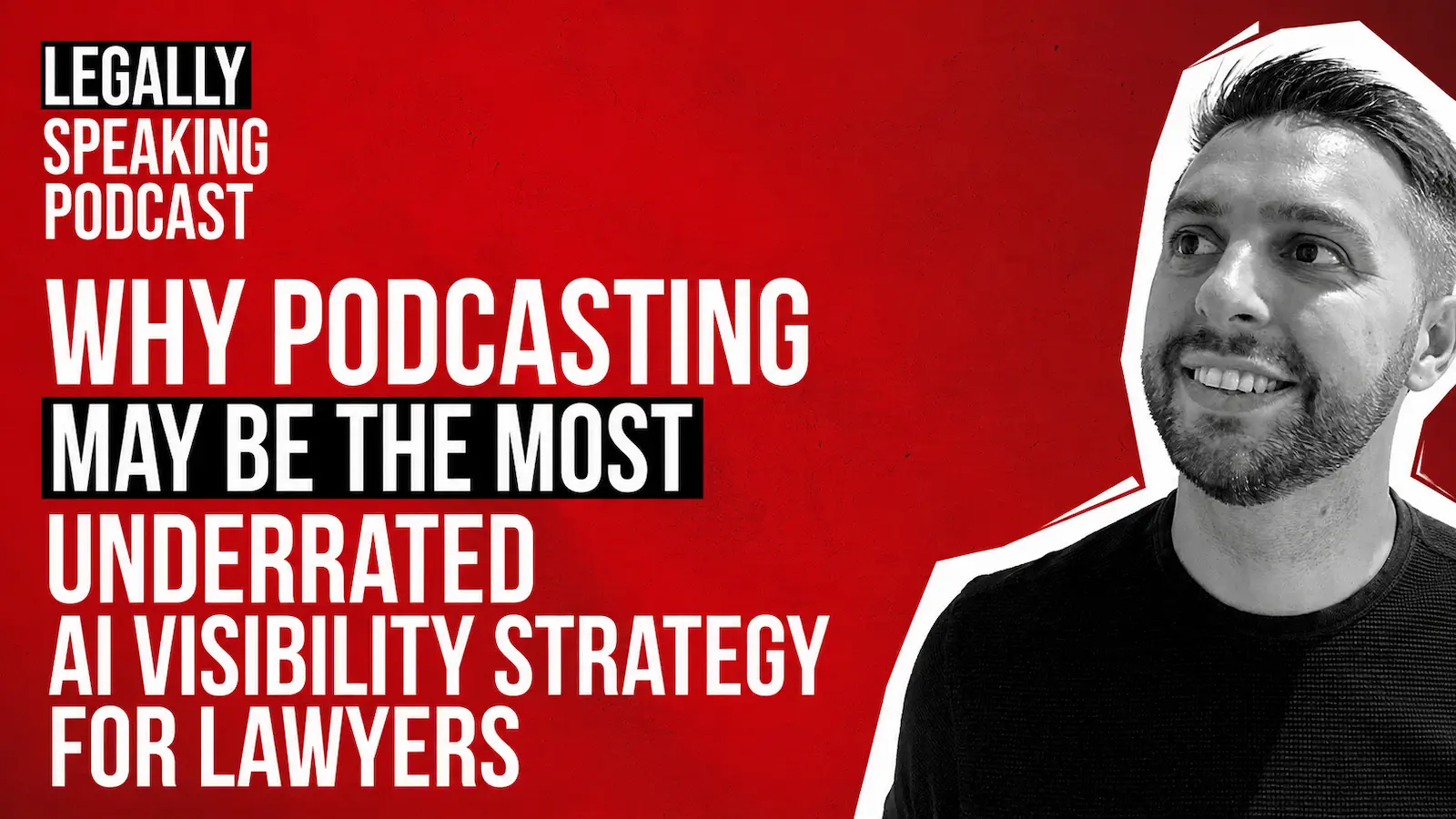
Rob Hanna, Founder and Host of the Legally Speaking Podcast, believes podcasts are becoming increasingly important in helping professionals establish authority and remain discoverable online:
"Having spent years speaking with some of the brightest minds across law and legal innovation on the Legally Speaking Podcast, I've seen first-hand how podcasts can become powerful engines for visibility, credibility and influence. Every conversation creates trusted, long-form content that continues to deliver value long after it's published.
As AI increasingly shapes how people discover expertise, podcasts provide authentic signals of authority, context and trust that machines can understand and surface. For lawyers and law firms looking to stand out, build their reputation and remain discoverable in an AI-driven world, appearing on respected podcasts is no longer a nice-to-have it's a strategic advantage."
The Compounding Effect
Perhaps the most compelling aspect of podcasting as an AI visibility strategy is its cumulative nature. A single appearance may have limited effect. Five appearances begin to establish a pattern, and ten spread across relevant industry platforms can substantially strengthen a lawyer's digital authority footprint. Each interview reinforces the same expertise signals, each transcript adds topical relevance, and each episode creates another discoverable source.
Many firms are still measuring success through traditional digital marketing metrics. These remain important. But AI search introduces a different question. It is no longer simply whether your website ranks. It is whether AI systems understand your expertise well enough to recommend you by name, unprompted.
The lawyers who contribute expert commentary consistently across multiple channels are building the answer to that question. The ones who do not may find it increasingly difficult to catch up.